Generated with AI2 min read
Anemometer
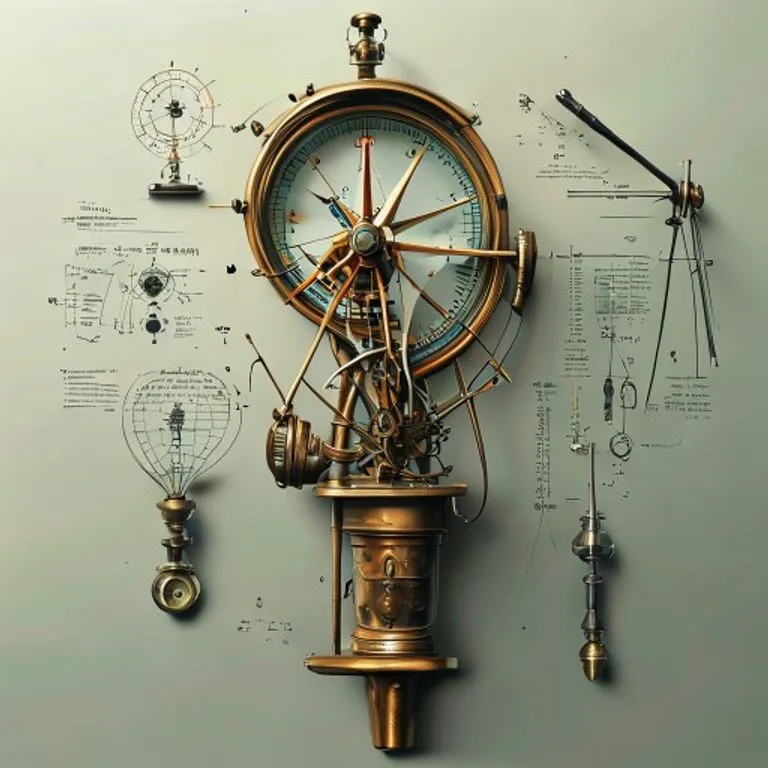
Brief description
An anemometer is a device used for measuring wind speed and direction. It is a common instrument used in weather stations to provide data for meteorological observations and forecasting.
Use / Function
- Wind Speed Measurement: Determining the velocity of the wind in units like meters per second or knots.
- Aviation and Navigation: Providing critical safety information for aircraft takeoffs/landings and ship handling.
- Energy: Assessing potential sites for wind turbines.
Operating principle
The most common type is the cup anemometer:
- It consists of three or four hemispherical cups mounted on horizontal arms, which are attached to a vertical shaft.
- The wind blowing past the cups in any horizontal direction turns the shaft at a rate that is proportional to the wind speed.
- Therefore, counting the turns of the shaft over a set time interval gives the average wind speed.
How to create it
Simple Cup Anemometer
- Level: Intermediate.
- Cups: Small plastic halves or lightweight metal cups.
- Arms: Lightweight wooden or metal rods.
- Pivot: A low-friction bearing or a sharpened nail resting in a glass tube to allow for easy rotation.
- Calibration: To calibrate, hold the anemometer outside a car window on a windless day while the car moves at a constant known speed (e.g., 20 km/h) and count the rotations.
Materials needed
- Essential: Cups (4), horizontal arms (2 crossing), vertical shaft, and a stable base.
- Tools: Drill, adhesive, and a stopwatch for measurement.
- Substitutes: Ping-pong ball halves can serve as effective cups for a small-scale model.
Variants and improvements
- Vane Anemometer: Uses a propeller that must be kept facing into the wind by a tail vane.
- Sonic Anemometer: Measures the time it takes for ultrasonic pulses to travel between pairs of transducers.
Limits and risks
- Friction: Bearings must be kept clean and lubricated to ensure accuracy at low wind speeds.
- Structural failure: High wind speeds (storms) can physically break the arms or cups if they are not sufficiently robust.
- Inertia: Heavy cups will respond slowly to changes in wind speed.