NaturalGenerated with AI1 min read
Ruby
Al2O3:Cr
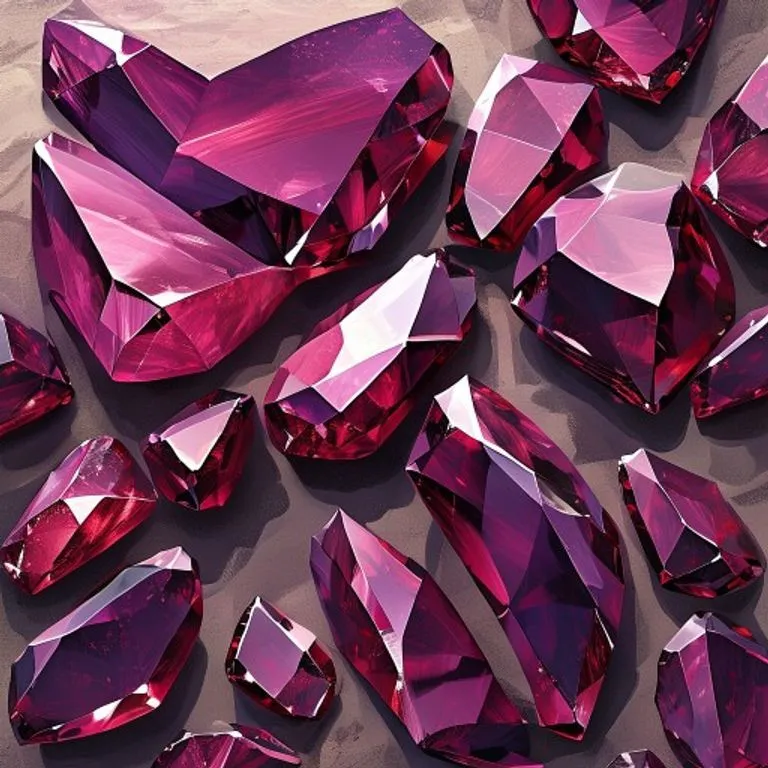
Description
A pink to blood-red colored gemstone, a variety of the mineral corundum (aluminum oxide). It is one of the hardest natural minerals.
Description of what it is like
Hard, crystalline stone with a red hue. Transparent to translucent.
Origin and where to find it
- Natural: Found in marble layers, basalt, or alluvial deposits (riverbeds).
- Synthetic: Can be created in labs (flame fusion) for industrial use.
Minimum processing required
- Cutting/Polishing: To shape for jewelry or bearings.
- Drilling: For use as watch jewels (requires diamond dust).
Tools needed to work on it
- Diamond tools: Only diamond is harder and can cut/polish ruby effectively.
Common forms of use
- Jewel Bearings: Tiny donuts of synthetic ruby used to reduce friction in watch gears.
- Gemstones: Cut and polished for ornamentation.
Possible substitutes
- Sapphire: Another variety of corundum, identical properties but different color.
- Glass: Much softer, wears out quickly.
- Brass/Bronze: Metal bushings (higher friction than jewels).
Limitations and common failures
- Brittle: Can chip or shatter upon hard impact despite hardness.
Risks and safety
- None: Chemically inert and safe.
Properties
- Hardness (9 Mohs)
- Durability
- Low friction
Used for
- Jewelry
- Watch bearings
- Lasers
- Abrasives
Manufacturing / Process
Mining or synthetic growth (Verneuil process).