NaturalGenerated with AI3 min read
Gypsum
CaSO4·2H2O
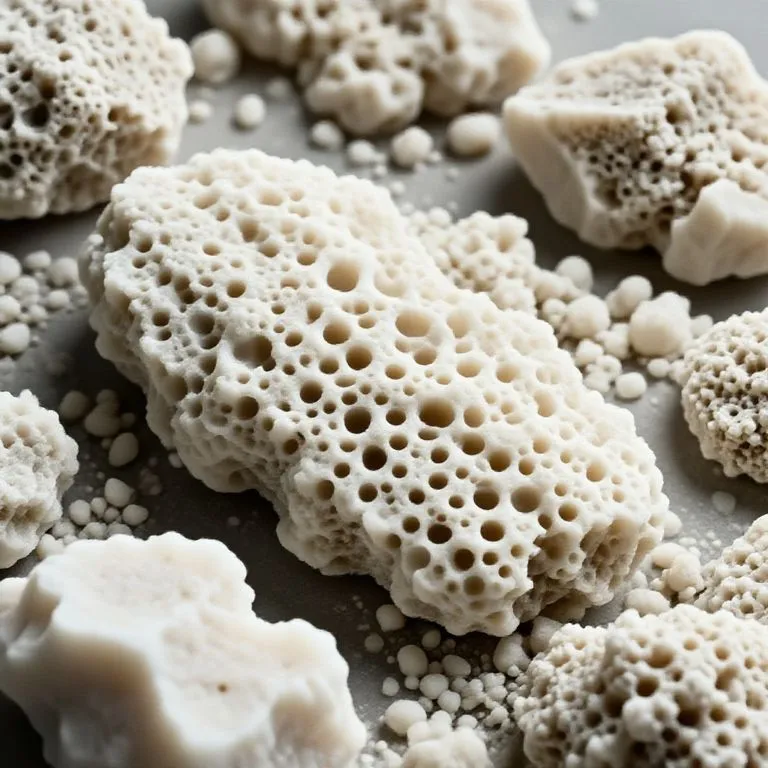
Gypsum is a mineral material that, after being heated and dehydrated, becomes a powder that quickly recovers its original solid form when mixed with water. It is one of the oldest binders used by humans.
Description of what it is like
- Natural Mineral: Soft, crystalline rock, white, gray, or pink in color.
- Processed Gypsum: Very fine white powder (Plaster of Paris).
- Set Mixture: White solid, smooth to the touch, but relatively soft (can be scratched with a fingernail).
Origin and where to find it
- Natural Deposits: Found abundantly in sedimentary layers of the earth’s crust, often associated with saline rocks.
- Appearance: Can appear as “alabaster” (white and translucent), “selenite” (transparent crystals), or granular rock masses.
Minimum processing required
It is much easier to produce than lime or cement because it requires lower temperature.
- Extraction: Extract gypsum stone (alabaster) from the quarry.
- Crushing: Break the stone into small pieces.
- Cooking: Heat the crushed stone at low temperature (between 100°C and 150°C). This removes part of the water from its crystal structure.
- Note: If heated too much (>200°C), it loses its ability to set (dead-burnt gypsum).
- Grinding: Grind the cooked product into a fine powder.
Tools needed to work on it
- Simple Kiln: Even a controlled bonfire can work if care is taken with the temperature.
- Mortar or Mill: To pulverize the cooked stone.
- Trough and Trowel: To mix with water and apply.
Common forms of use
- Black Plaster: Less pure, used for the first coat on walls.
- White Plaster: More pure and fine, for the final finish.
- Stucco: Mixture of gypsum with animal glue or resins for decorative finishes (artificial marble).
Possible substitutes
- Lime: More resistant to moisture and harder, but takes longer to set.
- Mud/Clay: For rustic coatings.
Limitations and common failures
- Moisture (Main Enemy): Gypsum is slightly soluble in water and loses its strength if it gets wet. It should not be used outdoors exposed to rain or in very humid areas.
- Corrosion: Wet gypsum corrodes iron and steel (must not be in direct contact with unprotected metal reinforcement).
- Very Rapid Setting: Hardens in minutes, forcing small batches to be prepared and worked quickly.
Risks and safety
- Dust: Inhalation of dust during grinding or sanding.
- Burns: Although cooked at low temperature, the process involves heat.
Properties
- Rapid setting
- Thermal insulator
- Fire resistant
- Easy to work
Used for
- Wall plaster
- Molds
- Mortar
- Floors
Manufacturing / Process
Partial dehydration of gypsum stone by mild heat.